IL-2 Sturmovik: Sopwith Snipe Collector Plane
1C Game Studios, Ugra Media · FOR-GAMES CR LTD · Dec 22, 2022
Delayed observation
Observed
0
Last tracked
0
All-time peak
n/a
Δ 24h
Player count last observed
Live player data is temporarily unavailable; historical values remain visible for context.
IL-2 Sturmovik: Sopwith Snipe Collector Plane - Steam Charts & Historical Stats
The Sopwith Snipe was a late-war entry into combat and represented the pinnacle of British Great War fighter aircraft. Explore historical player activity and pricing for IL-2 Sturmovik: Sopwith Snipe Collector Plane. Player-count data was last observed Apr 21, 2026.
Genre
Action
Developer
1C Game Studios
IL-2 Sturmovik: Sopwith Snipe Collector Plane player count and price summary
- Current players
- Unavailable
- All-time peak
- Unavailable
- 24-hour player change
- Unavailable
- Current US price
- Price unavailable
Player count last observed . Values marked unavailable are not estimated.
Media gallery 8 screenshots · 0 videos
Screenshots
Game Insights
Value Score
Fair Value — 50th percentile.
Price-to-player ratio ranks in the 50th percentile.
▬
Market pricing tier
Player count
System Requirements
Platform Support
Windows
Windows Requirements
Minimum:
Minimum:
- Requires a 64-bit processor and operating system
- OS *: 64-bit Windows® 7 (SP1) / Windows® 8 / Windows® 10
- Processor: Intel® Core™ i5/i7 3 GHz
- Memory: 8 GB RAM
- Graphics: 4GB VRAM or better
- DirectX: Version 11
- Storage: 75 GB available space
Recommended:
Recommended:
- Requires a 64-bit processor and operating system
Pricing
Paid Game
CDN$ 25.99 (CAD)
Additional Information
Categories
Single-player
Multi-player
PvP
Online PvP
Co-op
Online Co-op
Downloadable Content
Partial Controller Support
Includes level editor
Family Sharing
Supported Languages
English, Russian, German, Polish, French, Spanish - Spain, Simplified Chinese
Current Pricing
💰
CDN$ 25.99
Regular Price
Additional Information
🇧🇷
DEJUS Rating
14
Brazilian rating
🆘
Support
🎁
Purchase Options
1
package options
Developer Analytics
Loading competitors...
About This Game
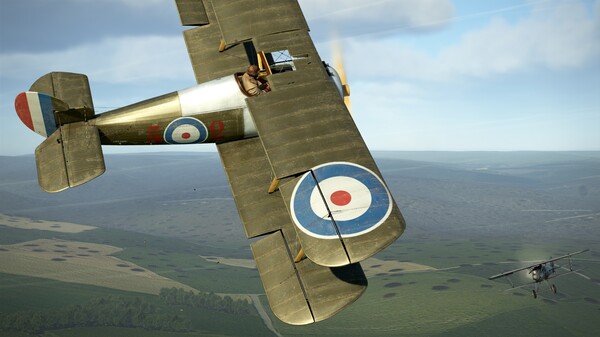
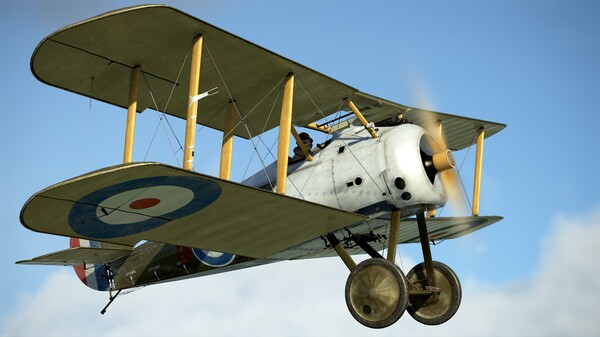
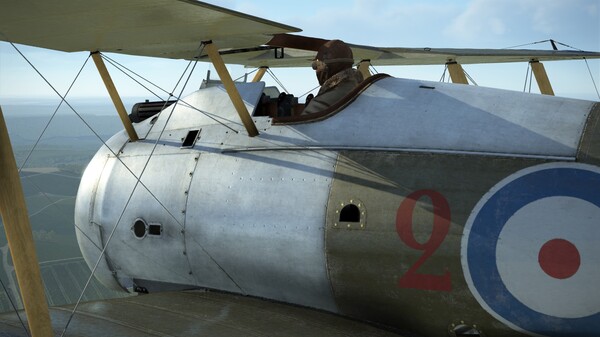
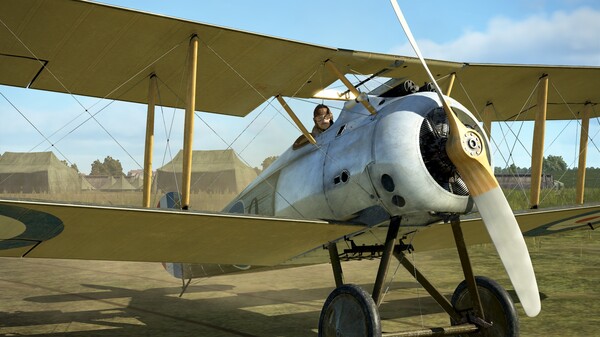
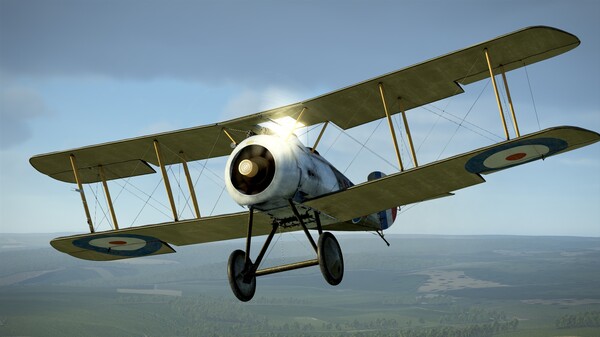
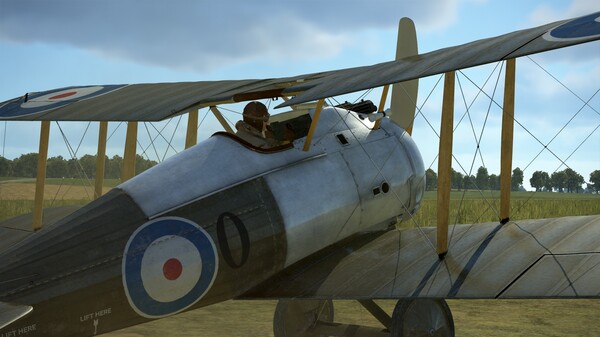
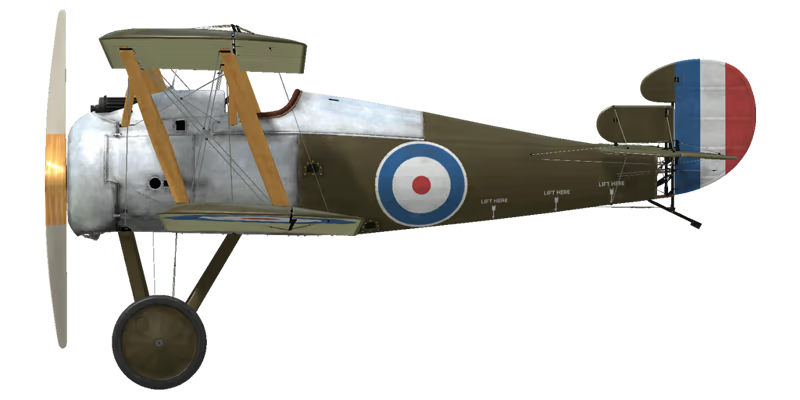
The Sopwith Snipe was a late-war entry into combat and represented the pinnacle of British Great War fighter aircraft.
Detailed Description
The Sopwith Snipe was created as a replacement for the Camel in response to the appearance of new enemy fighters. At the design stage, the Camels engines (for instance, the Clerget 9B or Bentley B.R.1) were considered for use, as well as the newer and more powerful Bentley B.R.2. The decision was finally made after successful tests of the latter that confirmed its exceptional performance (234 HP). The early prototype’s fuselage and wings were similar to its predecessor, but later on its look became final. The rectangular fuselage got rounded edges, the biplane wings were reinforced by an additional pair of struts per side and the vertical stabilizer got the bigger surface rudder thanks to the compensator.
Seven contracts for producing the first 1700 aircraft were assigned to Sopwith, Boulton & Paul, Coventry Ordnance Works, Napier, Nieuport & General, Portholme Aerodrome and Ruston Proctor companies. The first shipments began during the summer of 1918, but the production rate was lagging behind schedule. Only 77 airplanes were completed by the end of August instead of the planned 200. The total number of aircraft produced is not known, but at least 1567 Snipes were delivered. There were several improvements made to the design during the production run - for instance, the vertical stabilizer and upper wing ailerons surfaces have been increased even more. A more powerful (320 HP) radial engine, the ’Dragonfly’ was installed on some machines. The airplanes equipped with this engine became the ancestors of the new Sopwith Dragon after some additional changes in design.
Compared to the much-loved Camel, the Snipe won a cautious welcome from the pilots. While the new arrival was fast and maneuverable, it lost the famous nearly instant response to the pilot input of its predecessor because it was significantly more massive. In spite of this, the Snipe was a very formidable weapon in the hands of an experienced user. On October 27th, 1918, only a few weeks after they became available, Major W.G. Barker alone engaged 15 enemy airplanes and shot down 4 of them, getting wounded in the hand and both legs. He was awarded the Victoria Cross for this feat and his Sopwith Snipe fuselage has been preserved and moved to Canada, where it is displayed in the Canadian War Museum in Ottawa.
Only a handful of squadrons got the new aircraft in time to use it on the Western Front before the war ended: No.43 Squadron RAF, No.4 Squadron AFC and No.208 Squadron RAF. The Snipe saw its first action on September 26th, 1918.
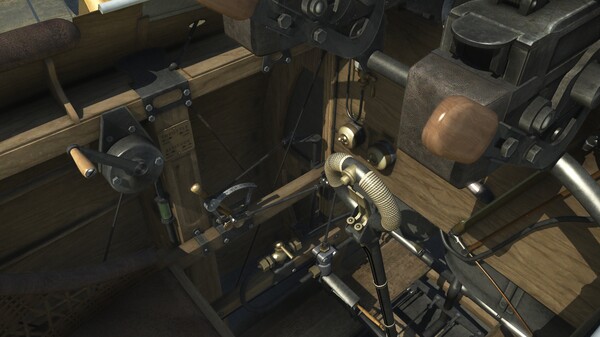
Sopwith Snipe is the first WWI aircraft available in Great Battles outside of Flying Circus packs and is completely new addition - it wasn't modeled in our earlier sim Rise of Flight. It can be used in Quick Mission Builder, Advanced Quick Mission Generator and Multiplayer modes.
Empty weight : 608 kg
Takeoff weight : 905 kg
Fuel capacity : 176 l
Oil capacity : 33 l
Climb rate
1000 m — 2 min. 31 sec
2000 m — 5 min. 24 sec.
3000 m — 8 min. 49 sec.
4000 m — 13 min. 00 sec.
5000 m — 18 min. 31 sec.
6000 m — 28 min. 23 sec.
Maximum airspeed (IAS)
sea level — 197 km/h
1000 m — 188 km/h
2000 m — 178 km/h
3000 m — 167 km/h
4000 m — 156 km/h
5000 m — 143 km/h
6000 m — 116 km/h
Service ceiling 6100 m
Endurance at 1000 m
nominal power (combat) — 2 h. 5 min.
minimal consumption (cruise) — 4 h. 20 min.
Seven contracts for producing the first 1700 aircraft were assigned to Sopwith, Boulton & Paul, Coventry Ordnance Works, Napier, Nieuport & General, Portholme Aerodrome and Ruston Proctor companies. The first shipments began during the summer of 1918, but the production rate was lagging behind schedule. Only 77 airplanes were completed by the end of August instead of the planned 200. The total number of aircraft produced is not known, but at least 1567 Snipes were delivered. There were several improvements made to the design during the production run - for instance, the vertical stabilizer and upper wing ailerons surfaces have been increased even more. A more powerful (320 HP) radial engine, the ’Dragonfly’ was installed on some machines. The airplanes equipped with this engine became the ancestors of the new Sopwith Dragon after some additional changes in design.
Compared to the much-loved Camel, the Snipe won a cautious welcome from the pilots. While the new arrival was fast and maneuverable, it lost the famous nearly instant response to the pilot input of its predecessor because it was significantly more massive. In spite of this, the Snipe was a very formidable weapon in the hands of an experienced user. On October 27th, 1918, only a few weeks after they became available, Major W.G. Barker alone engaged 15 enemy airplanes and shot down 4 of them, getting wounded in the hand and both legs. He was awarded the Victoria Cross for this feat and his Sopwith Snipe fuselage has been preserved and moved to Canada, where it is displayed in the Canadian War Museum in Ottawa.
Only a handful of squadrons got the new aircraft in time to use it on the Western Front before the war ended: No.43 Squadron RAF, No.4 Squadron AFC and No.208 Squadron RAF. The Snipe saw its first action on September 26th, 1918.
Sopwith Snipe is the first WWI aircraft available in Great Battles outside of Flying Circus packs and is completely new addition - it wasn't modeled in our earlier sim Rise of Flight. It can be used in Quick Mission Builder, Advanced Quick Mission Generator and Multiplayer modes.
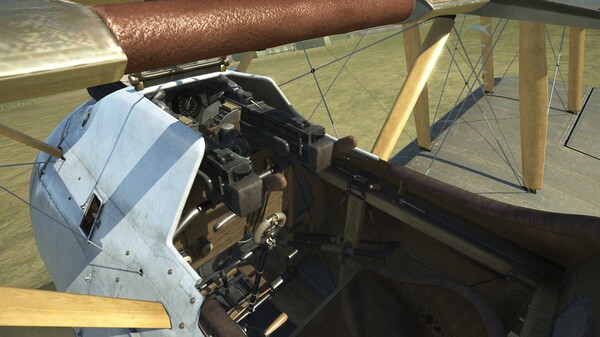
- Default armament: Two Vickers Mk.I 7.69 mm machineguns, 500 rounds per barrel.
- Bomb load: up to 51 kg
- Length: 5.87 m
- Wingspan: 9.14 m
- Wing surface: 24.45 m²
Armaments and Modifications
- Up to 4 x 11 kg (24 lb) Cooper General Purpose Bombs (56 kg weight increase, 2 kph speed loss).
- 51 kg (112 lb) H.E.R.L. General Purpose Bomb (57 kg weight increase, 2 kph speed loss).
- Enlarged cockpit cutouts for improved field of view ("Barker mod").
- Aldis Refractor-type Collimator Sight (2 kg).
- Cockpit light for night sorties (9 kg including batteries).
Skins
- Standard paint scheme (customizable tactical number).
- Major William Barker, 50 victories, 201 Squadron RAF, October 27, 1918.
- Letter 'D', A Flight No. 208 Squadron RAF, November 1918.
- Number '1-4', B Flight No. 70 Squadron RAF, 1919.
- Edward Mulcair, possibly 2 victories, A Flight, October-November 1918.
- Thomas Charles Richmond Baker, 12 victores, B Flight No. 4 Squadron AFC, October 1918.
- Captain George Roberts Howsam, 8 victories, No. 43 Squadron RAF, Autumn 1918.
- Captain Elwyn Roy King, 26 victories, A Flight No. 4 Squadron AFC, Autumn 1918.
- Trainer aircraft, South Eastern Instructors School, 1918-1919.
Technical details
Empty weight : 608 kg
Takeoff weight : 905 kg
Fuel capacity : 176 l
Oil capacity : 33 l
Climb rate
1000 m — 2 min. 31 sec
2000 m — 5 min. 24 sec.
3000 m — 8 min. 49 sec.
4000 m — 13 min. 00 sec.
5000 m — 18 min. 31 sec.
6000 m — 28 min. 23 sec.
Maximum airspeed (IAS)
sea level — 197 km/h
1000 m — 188 km/h
2000 m — 178 km/h
3000 m — 167 km/h
4000 m — 156 km/h
5000 m — 143 km/h
6000 m — 116 km/h
Service ceiling 6100 m
Endurance at 1000 m
nominal power (combat) — 2 h. 5 min.
minimal consumption (cruise) — 4 h. 20 min.
Aircraft 3D model developed by Ugra Media studio.

Frequently Asked Questions
Is IL-2 Sturmovik: Sopwith Snipe Collector Plane free to play?
Yes, IL-2 Sturmovik: Sopwith Snipe Collector Plane is free to play on Steam.
What genre is IL-2 Sturmovik: Sopwith Snipe Collector Plane?
IL-2 Sturmovik: Sopwith Snipe Collector Plane is a Action, Simulation game.
Who developed IL-2 Sturmovik: Sopwith Snipe Collector Plane?
IL-2 Sturmovik: Sopwith Snipe Collector Plane was developed by 1C Game Studios and published by FOR-GAMES CR LTD.
What platforms does IL-2 Sturmovik: Sopwith Snipe Collector Plane support?
Available on Steam for Windows.