Crusader Kings III: Symbols of Authority
Crusader Kings III: Symbols of Authority - Steam Charts & Historical Stats
Crusader Kings III: Symbols of Authority includes seven new hairstyles and royal headwear, inspired by historical models, to accentuate the majesty of your characters. Explore historical player activity and pricing for Crusader Kings III: Symbols of Authority. A current player-count observation is unavailable.
Crusader Kings III: Symbols of Authority player count and price summary
- Current players
- Unavailable
- All-time peak
- Unavailable
- 24-hour player change
- Unavailable
- Current US price
- Price unavailable
No current player-count observation is available; unavailable values are not estimated.
Media gallery 2 screenshots · 0 videos
Screenshots
System Requirements
- Requires a 64-bit processor and operating system
- Requires a 64-bit processor and operating system
Additional Information
*languages with full audio support
Pricing Information
Additional Information
Developer Analytics
Loading competitors...
About This Game
Crusader Kings III: Symbols of Authority includes seven new hairstyles and royal headwear, inspired by historical models, to accentuate the majesty of your characters.
Detailed Description
Wear your majesty on your head with Symbols of Authority, a new clothing pack for Crusader Kings III, available as an instant unlock upon purchase of the Chapter V expansion pass.
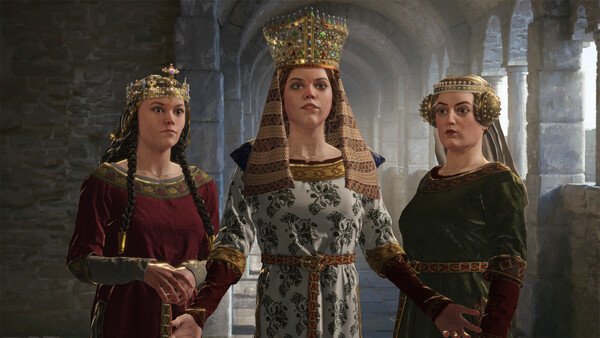
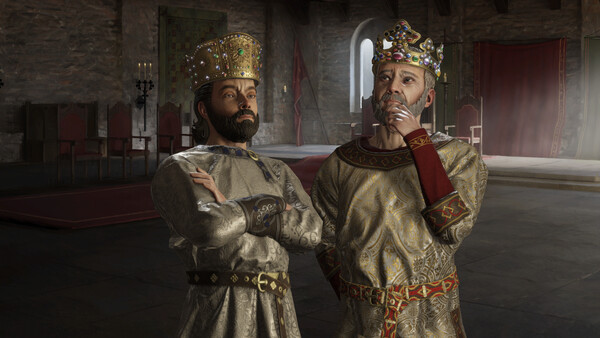
This cosmetic clothing pack for Crusader Kings III includes new crowns and headstyles, each designed to highlight the royal headgear of historic medieval cultures.
Crusader Kings III: Symbols of Authority includes:
Male Byzantine Crown, inspired by the headwear of Emperor Constantine the Great of the Eastern Roman Empire
Female Byzantine Crown, inspired by the headwear of Empress Catherine of Bulgaria
The Palatine Crown, a 14th century royal relic of Bohemia
Royal German Crown, inspired by North and Central European headwear
New Male Hairstyle, inspired by a 1370 bust of John the Baptist
New Female Hairstyle, inspired by an early 1300s variation on the crispinette
New Male Beard, inspired by a 1370 bust of John the Baptist